Randy Strickland’s title of operations assistant does not entirely encapsulate the work he does for Marist Athletics.
In his 39th year at Marist, he does just about everything: painting and lining fields, setting up tech in McCann Arena, dealing with lights and more.
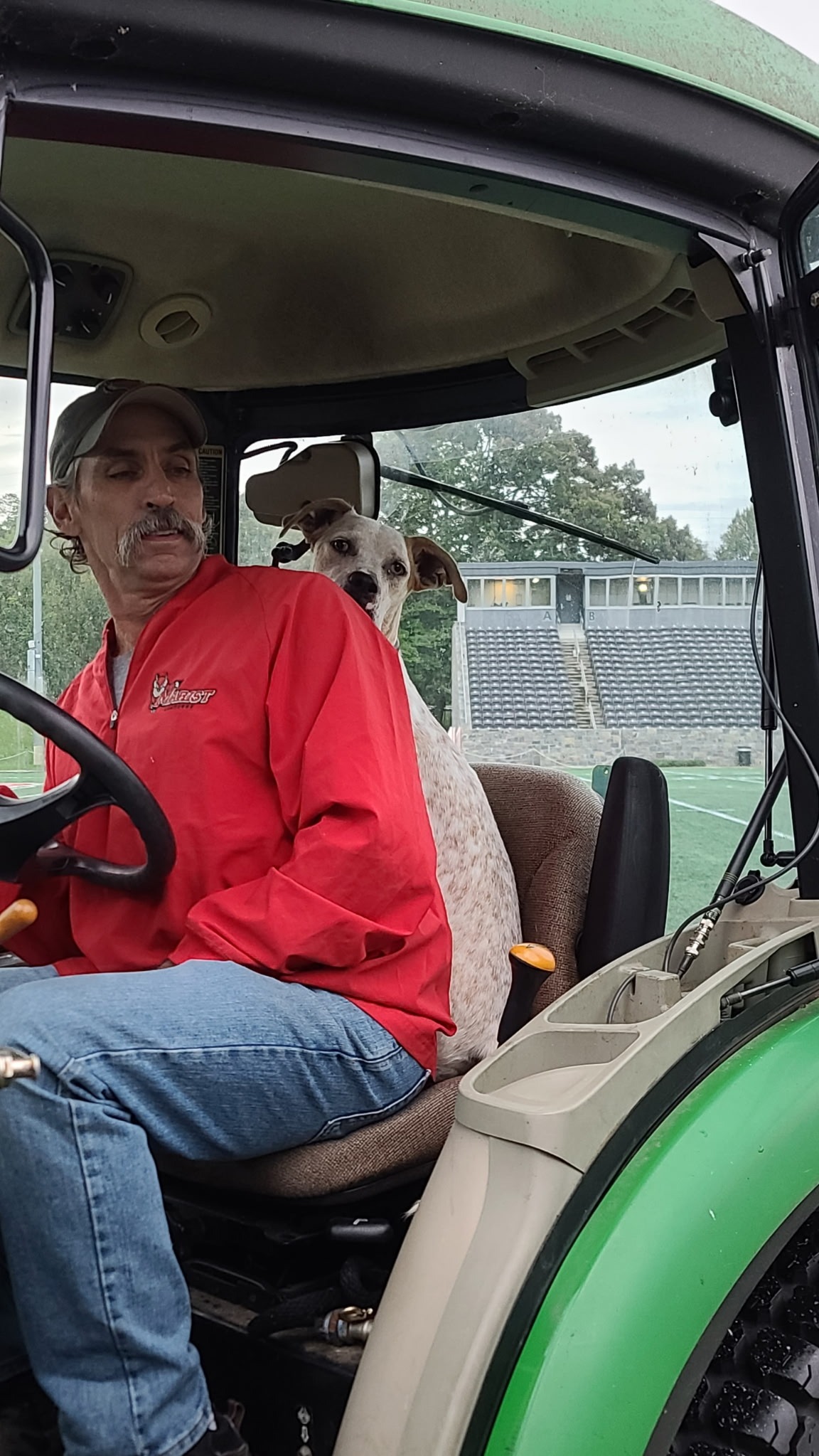
He has a crew of about 15 students—a mix of athletes and non-athletes—that help him with his near-endless list of tasks spanning the McCann Center, Tenney Stadium, North Field, the boat house, tennis courts, baseball field and softball field. There is one extra helper, though, who is most recognizable.
Baxter, a roughly four-year-old red healer mix, is attached at Strickland’s hip almost constantly. He wanders McCann and traverses campus in a golf cart with him, becoming his own form of a campus celebrity and Strickland’s work companion along the way.
He frequently engages with students and enjoys greeting people in McCann or around campus. On Instagram, associate athletic director for student athlete enhancement Alyssa Gates started an account, @baxterboy845, that has over 600 followers and posts some of Baxter’s work experiences.
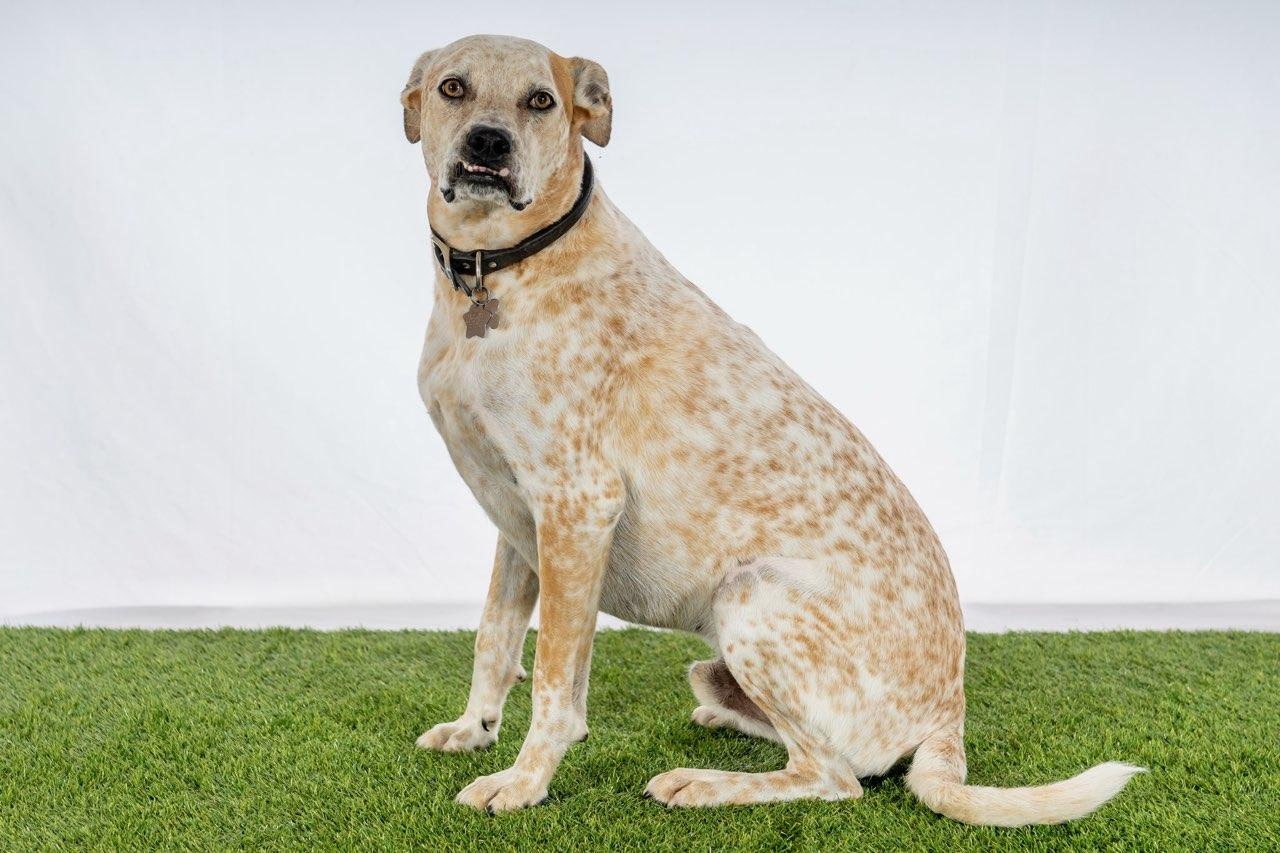
Strickland met Baxter at the perfect time. A few years ago, after the passing of two of his previous dogs, Strickland was looking for another. However, the process to get one was frustrating.
“I started looking online, and it’s mind boggling,” he said. “There’s like millions [of dogs] everywhere, and the process is ridiculous. They take blood type, background check, all this crap, and I’m not used to that; the other two we got we just picked them up.”
Just as he grew fed up with the process, one Sunday morning, he shut his computer and headed to work. He made a run across Route 9 to Home Depot, where he encountered a woman with two dogs as he prepared to check out.
“I didn’t stop to get the dog, I stopped to pet the dog,” Strickland said.
He discovered that she was fostering the dogs and that Baxter would soon be up for adoption. This time, the process was less frustrating; he went home, filled out his information and picked up his new dog the next day.
Baxter started coming to work with Strickland right away. On his lunch break, Strickland went to pick up Baxter and brought him straight to Marist. Going forward, his wife was hesitant to have him at the house with their other dog.
“So I was like ‘well, I’ll just take him to work,’” Strickland said.
So began Baxter’s routine of coming to work just about everyday. Strickland’s previous dogs came once in a while, sometimes on weekends or on days when Strickland knew he would spend a lot of time outside. But between his wife wanting Baxter out of the house and his ability to learn quickly, Baxter found himself at McCann on a far more frequent basis.
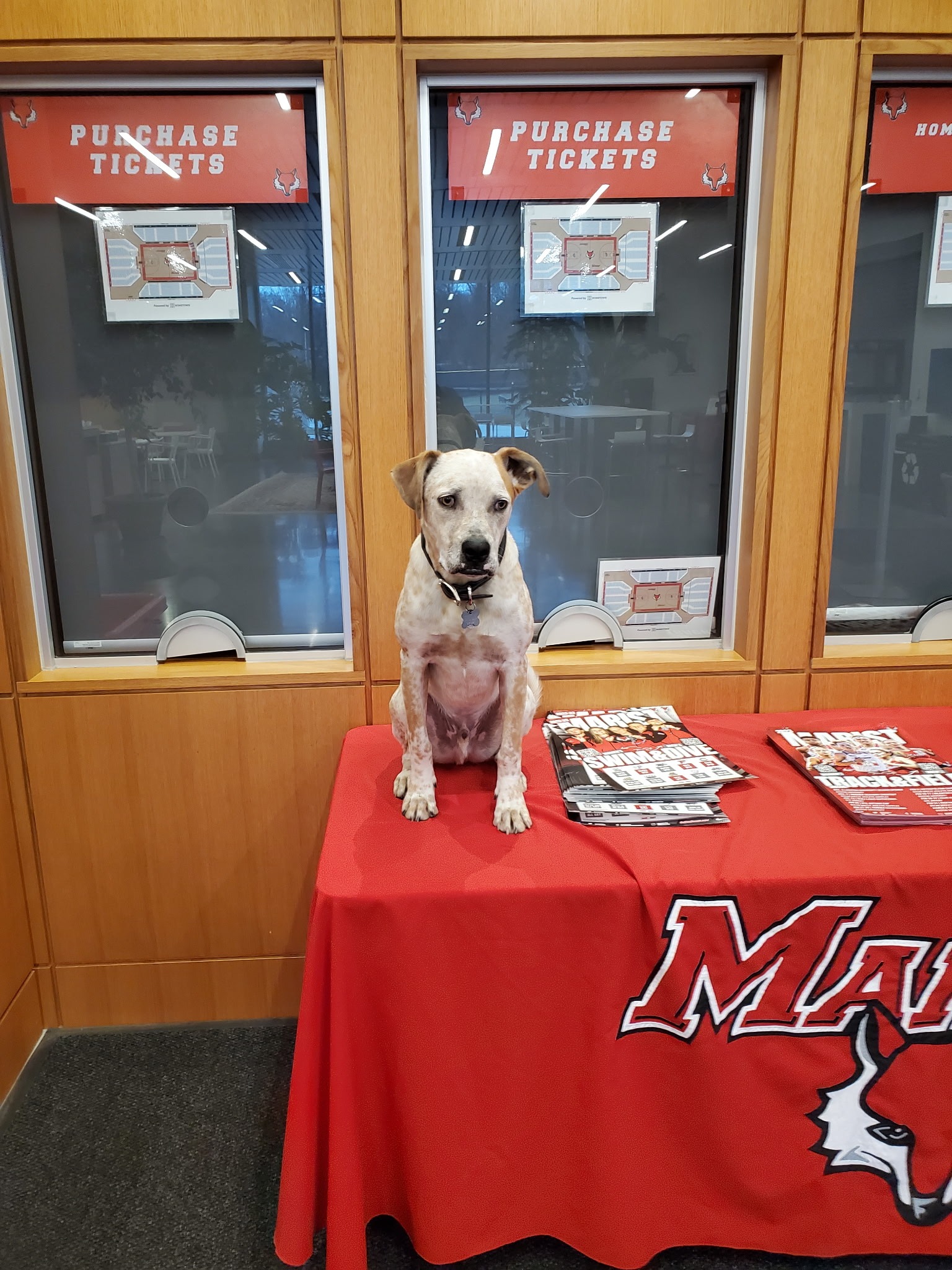
There used to be a relatively relaxed rule that Baxter did not come in for football or basketball games because they were more intense. If Strickland had to respond to a problem, like a scoreboard issue, he could not have Baxter following him around.
Even those rules became more lenient as Baxter cemented himself as a constant presence in the McCann Center and across campus.
“Most of the other departments on campus [complain] that I’m not bringing him enough to come visit,” Strickland said.
People around campus, whether it be athletes, students or Athletics staff, love Baxter. Strickland said that athletic director Tim Murray and Marist President Kevin Weinman both enjoy having him around.
“He made friends with all the important people, so that was good to help us keep him around,” Strickland said. “We hit all the bigs, went right to the top. Why mess around?”
Sometimes, Strickland has a meeting to attend that he does not want to bring Baxter to. In those cases, he brings him to the “babysitter,” or the academic enhancement office. The staff there keeps an eye on him while Strickland is gone.
“I never leave him in McCann by himself,” Strickland said. “He’d freak out, if he loses me he freaks out.”
Baxter learned to be careful not to lose his owner early on. A couple of times, he got distracted by the allure of the McCann Cafe and lost track of Strickland. That left him panicking, and he now knows to ignore the temptation and stay with Strickland.
Baxter, originally from South Carolina, was roughly nine months old when Strickland adopted him. Strickland has never done a DNA test to establish exactly what kind of dog Baxter is; when he got him, Baxter was identified as a red healer mix. His coat resembles such, but his face features some resemblance of a boxer. When Strickland describes him to people, he calls him a red healer boxer because in addition to his appearance, he behaves like both breeds.
“Red healers are very easy to train, very loyal. Everyone says ‘oh they’re the best dog I’ve ever had,’” Strickland said. “Boxers are playful, I remember my cousin had boxers all the time and they really like to play; they have a personality.”
The red healer characteristics are especially apparent in Baxter’s behavior. He trained very quickly and easily, amazing Strickland with how quickly he learned the cart; when they go around campus and he leaves the cart to roam around, he knows to get back in when they leave and listens when he is told to “get in the cart.”
“The speed at which he learns is incredible,” Strickland said. “It doesn’t take him too many times to pick up on something.”
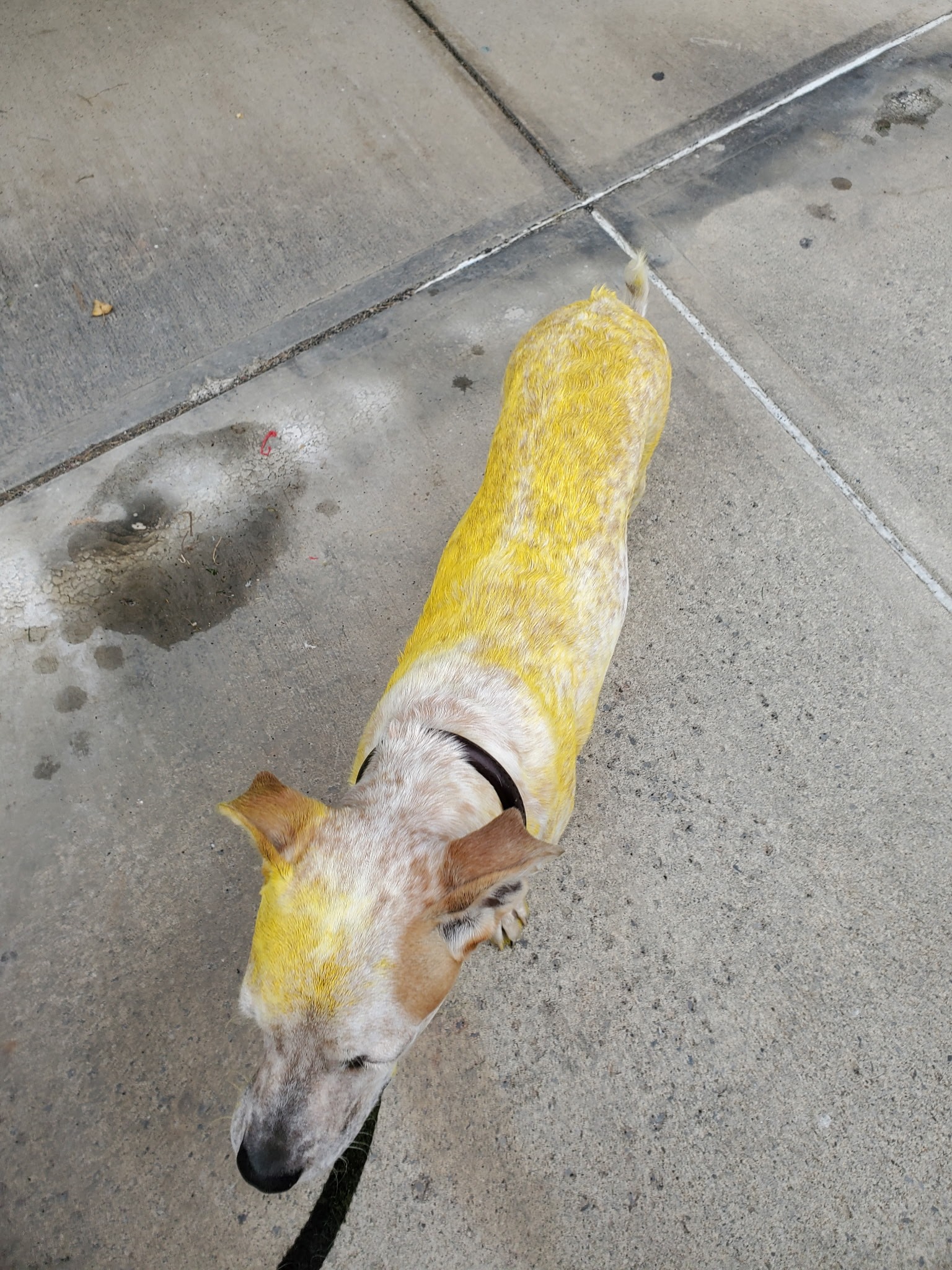
Even with his quick learning, he does sometimes cause trouble. One time, while Strickland painted the lines for the soccer field, Baxter rolled around in wet yellow paint.
“The lacrosse girls were trying to laugh and practice at the same time, because they also noticed the yellow dog,” Strickland said.
Several other dogs have begun to frequent McCann, including women’s lacrosse head coach Keith Detelj’s, Bo, who Strickland testified is much more of a troublemaker. Men’s lacrosse head coach Dave Scarcello’s dog, Java, and assistant athletic director for intramural sports/club sports/camps Stephen D’Alessandro’s puppy, Zuko, also make their own appearances. Still, most other dogs have not been as consistent a presence as Baxter.
Strickland found Baxter when he needed him most, and they have since turned into nearly constant companions. And coworkers.
“It was crucial, I needed him at the time mentally,” Strickland said. “It was good for me.”
Edited by Hayden Shapiro and August Lieberman
Photo via Stockton Photo
For more coverage of Marist athletics, follow @cfmarist on Instagram, X, TikTok and Bluesky, and sign up to receive daily alerts here.